“Future Plus hybrid inverter” is a product-family label, not a complete procurement specification. By checking the operating mode, electrical limits, battery compatibility, backup behaviour and installation requirements, you can decide which exact model belongs in stock and which customer applications it cannot serve.
Key takeaways
- Match all four claimed functions to named datasheet ratings.
- Calculate battery capacity from watts, backup hours, and usable depth of discharge.
- Separate essential backup circuits before approving the inverter size.
- Choose another architecture when grid export, high surge, or three-phase loads dominate.
What does “4-in-1” mean in a Future Plus hybrid inverter?
A solar products wholesaler evaluating a Future Plus hybrid inverter should confirm four separate functions in the exact datasheet:
- Solar inverter: supplies AC loads from PV and sends surplus energy to the battery in grid-connected self-consumption mode.
- Battery charger: manages DC charging from PV.
- Grid charger: charges the battery from utility power if the model supports it.
- UPS or backup-output controller: supplies designated loads when the grid fails.
The specified transfer time decides whether sensitive equipment stays online. Off-grid operation requires proof that the inverter forms its own AC waveform without utility power, plus an isolated backup output or correctly designed changeover arrangement.
| Option | What it means | Main limitation |
|---|---|---|
| Future Plus hybrid | PV, battery, grid charging and backup in one unit | Confirm every function by model |
| Pure off-grid inverter | Builds an independent microgrid | Not designed primarily for grid-parallel operation |
| H6 grid-tied inverter | Converts PV for a live grid connection | Does not automatically provide outage power |
| Separate inverter, UPS and battery | Modular components with replaceable parts | More equipment, wiring and commissioning |
Check whether the unit is single-phase 230 V, 50 Hz or compatible with the site’s three-phase architecture. A single-phase inverter is not a three-phase replacement because its kVA appears sufficient. Also verify anti-islanding protection and the backup neutral arrangement. Do not rely on broad solar inverter keywords; “hybrid” and “off-grid” are not interchangeable labels.
Which Future Plus specifications must a wholesaler verify before ordering?
A wholesaler should order only against the exact Future Plus model and datasheet revision, not the product-family name. Record these fields before quoting a customer or listing the unit in a solar power system supplier catalogue:
- AC: rated continuous output in kW and kVA, surge output, surge duration, overload-clearing behaviour, nominal voltage, phase, frequency and transfer time.
- PV: absolute maximum DC voltage, operating-voltage or MPPT range, maximum PV power, maximum PV input current, short-circuit current limit and number of MPPT trackers.
- Battery: voltage window, maximum charge voltage, firmware version, continuous charge and discharge current, and peak-current limits.
| Area | Compare | Procurement check |
|---|---|---|
| PV voltage | Cold-weather array Voc | Keep the site’s lowest-temperature Voc below the inverter’s absolute DC limit. |
| PV current | Each string’s operating and short-circuit current | Stay within that individual MPPT’s limits; acceptable wattage does not make an unsafe voltage or current combination safe. |
| PV oversizing | Array nameplate power and inverter AC rating | Use only the model-specific clipping limit and permitted array ratio. |
| Battery | VISIONTEK LiFePO4 data | Confirm lithium iron phosphate chemistry, nominal voltage, usable capacity, CAN or RS485 protocol and approved battery list. |
Also obtain the specified battery cable, connector and communications lead. Ask for a documented voltage-control fallback if communications fail; nominal voltage alone does not justify a lithium retrofit. Capture the battery’s peak limits and confirm the inverter’s maximum charge voltage.
Do not approve a catalogue entry built from solar inverter keywords such as “dual MPPT” or “UPS” without these figures. “UPS” must match the stated transfer time and intended load type.
How should you size backup energy and choose outage loads?
Inverter power and battery energy answer different questions: power handles simultaneous demand, while energy determines how long the loads run. List every proposed backup circuit with its running watts, starting VA, duty cycle and required backup hours.
- Keep essential lighting, internet equipment, refrigeration and selected sockets on the backup output.
- Leave electric water heaters, ovens and other high-demand circuits outside it unless the load study approves them.
- Check motors, compressors, pumps, air conditioners and switched-mode power supplies against Future Plus surge rating and surge duration; their start-up demand can exceed running wattage.
| Load group | Backup decision | Main check |
|---|---|---|
| Essential lighting and internet | Include | Running watts and hours |
| Refrigerator or pump | Include only if approved | Starting VA and surge duration |
| Water heater or oven | Exclude by default | Continuous kW and battery current |
| Air conditioner | Include only after testing | Inrush, transfer time and motor compatibility |
Check the battery, BMS, fuse and DC cables as one system. A 5 kW AC demand from a nominal 48 V battery requires about 104 A before conversion losses, so a 5 kW inverter cannot guarantee 5 kW from every 48 V battery.
Estimate nominal battery energy as load kW × backup hours ÷ inverter efficiency ÷ permitted depth-of-discharge fraction. Compare that result with usable kWh, continuous-current rating, temperature limits and reserve policy; nominal capacity is not night-time delivered energy.
Confirm that the backup output is truly isolated, record its transfer time, and test the intended motor or air conditioner. An off grid solar inverter dealer should also verify whether the unit can form its own waveform without utility power.
What installation and commissioning workflow should EPCs follow?
Use this nine-stage workflow to turn a Future Plus installation into a documented, testable handover.
1. Survey the site. Record connected loads, utility bills, phase arrangement, essential-load circuits and the neutral configuration. Confirm whether the supply is single-phase or three-phase before selecting the inverter and backup panel.
2. Size the system. Check PV voltage, current, power and temperature limits against the array. Check the approved battery’s voltage window, capacity, charge and discharge current, temperature range and BMS requirements.
3. Specify protection. Select DC isolators, string fuses where required, AC breakers, surge-protection devices, earthing conductors and cable sizes from array fault current, the installation manual and utility rules. Internal inverter protection does not replace every external device.
4. Prepare the location. Provide the manufacturer’s clearance and ventilation. Check ambient-temperature range, derating curve, humidity, altitude and direct-sun exposure; an outdoor IP rating does not prevent heat derating.
5. Wire in sequence. Isolate every source, complete protective earthing, connect the battery through the specified fuse with correct polarity, connect approved communications leads, connect PV strings, then wire AC and backup outputs. Use the designed changeover so backup loads cannot energise a failed utility line.
6. Test before energising. Verify polarity, insulation resistance, earth continuity, open-circuit string voltage and communications.
7. Configure chemistry, capacity, charge limits, grid profile, export or zero-export control, CT orientation, backup priority and firmware.
8. Commission grid, battery, backup and outage modes safely, confirming anti-islanding and recording fault codes.
9. Handover with settings, single-line diagrams, test results, serial numbers, firmware versions and customer sign-off. A solar power system supplier should retain these records instead of relying on solar inverter keywords.
When should a wholesaler stock Future Plus—and when is another architecture better?
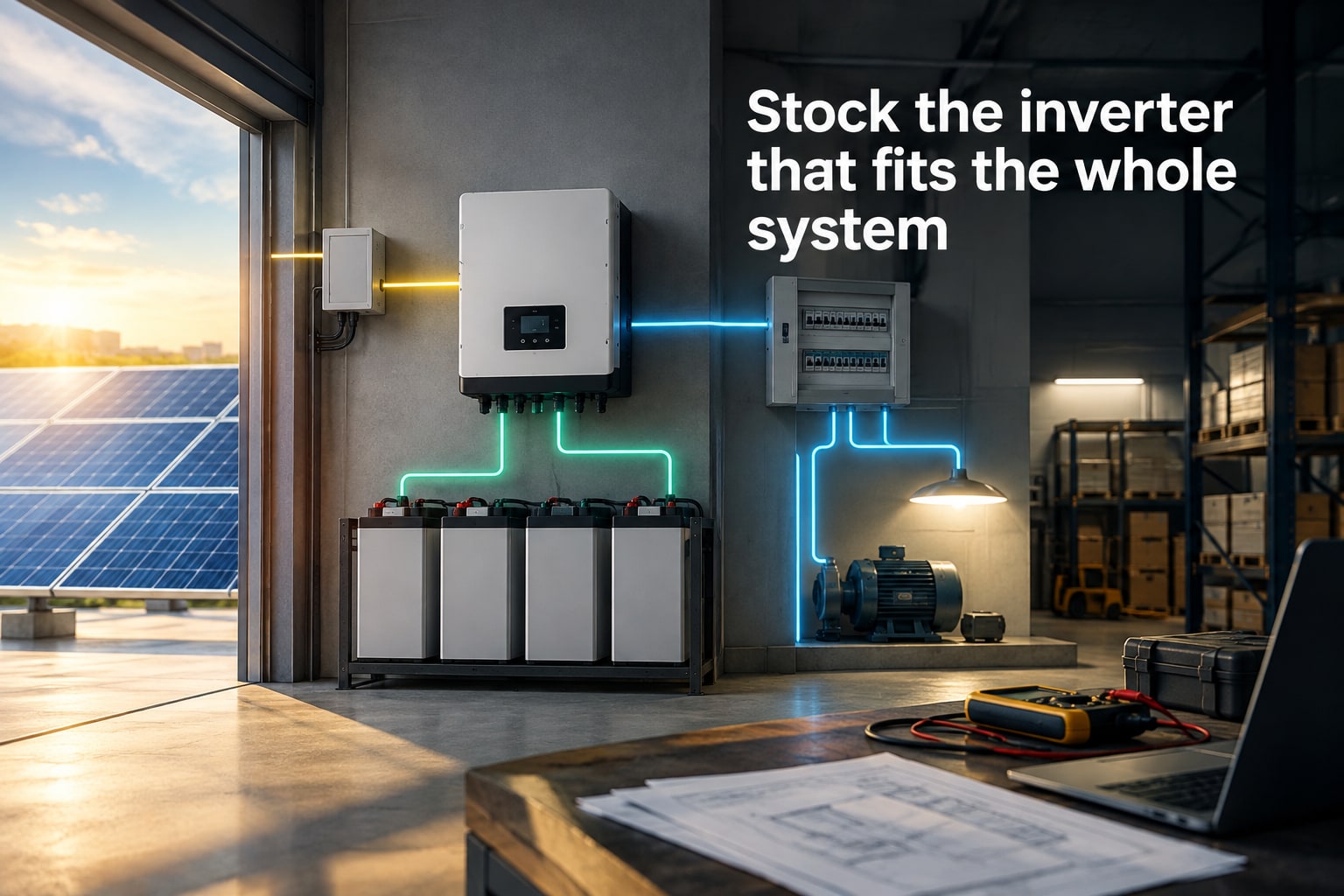
Stock Future Plus for sites that need coordinated PV, battery storage, self-consumption and outage backup in the specified phase configuration. A solar products wholesaler comparing a Future Plus hybrid inverter must confirm island-forming capability and an isolated backup output; “hybrid” alone proves neither.
| Option | Choose it when | Reject it when |
|---|---|---|
| Future Plus hybrid | PV, battery, self-consumption and outage backup share one specified phase configuration | The load is large three-phase, uses another phase arrangement or exceeds the approved motor-starting surge |
| Battery-ready grid-tied unit | The customer wants future battery integration but accepts no independent outage operation | The inverter must form an island during a grid failure |
| True off-grid inverter | A remote microgrid has no utility reference | The site needs normal grid export or utility-synchronised operation |
| Conventional grid-tied inverter | The project only exports PV to the grid, with no battery or backup | The customer requires stored energy or outage supply |
Build the stock file around exact model numbers and revisions, not labels such as “pure sine wave,” “dual MPPT,” “parallel” or “zero export.” Confirm the correct CT or meter, orientation and firmware for zero export; dual MPPT does not guarantee equal voltage or current limits.
Request an efficiency curve or weighted-efficiency figure, standby consumption and operating-temperature derating. One peak-efficiency percentage hides losses at low load, during battery charging and overnight.
For buyers using Kusum Surya Ghar LLP as a solar power system supplier, ask for firmware access, battery-protocol updates, fault-code support, replacement fans or boards, monitoring, warranty exclusions and the transport-return process. An off grid solar inverter dealer needs those records to quote a system rather than a product-family label.
Related services
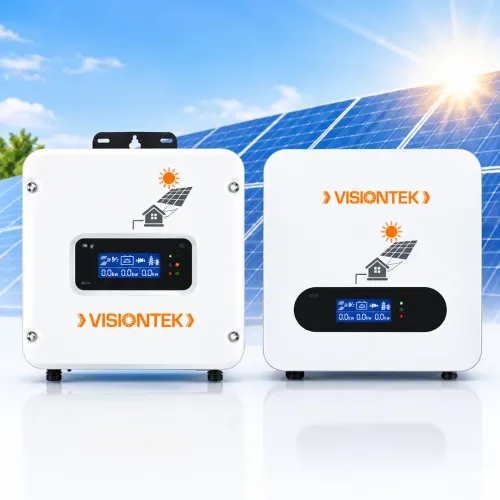
Inverter Future+ Hybrid Inverter Visiontek Future+ 4-in-1 Solar Inverter – Smart, Flexible & Reliable Solar Power Solution The Visiontek Future+ 4-in-1 Solar Inverter is an advanced... |
Inverter Solar Grid-Tie Inverter with H6 Technology Visiontek Solar Grid-Tie Inverter with H6 Technology Product Description The Visiontek Solar Grid-Tie Inverter with H6 Technology is designed to... View service → |
Frequently asked questions
What does “4-in-1” mean in a Future Plus hybrid inverter?
Confirm the four functions by name in the datasheet, such as inverter output, solar charge control, battery charging, and backup transfer. Do not rely on the 4-in-1 label alone.
Which Future Plus specifications must a wholesaler verify before ordering?
Check continuous output, surge rating, battery voltage, MPPT voltage and current range, maximum PV input, charging current, transfer time, efficiency, protection features, enclosure rating, and warranty terms.
How should you size backup energy and choose outage loads?
List essential loads, record each wattage, multiply total watts by required backup hours, and divide for battery losses and usable depth of discharge. Keep high-surge appliances off the backup circuit unless the inverter supports them.
What installation and commissioning workflow should EPCs follow?
Confirm the single-line diagram, isolate AC and DC circuits, verify polarity and cable sizes, configure battery and PV limits, test charging and transfer, measure output voltage, and record commissioning readings.
When should a wholesaler stock Future Plus—and when is another architecture better?
Stock it for projects needing integrated solar, battery, charging, and backup functions. Choose another architecture for demanding three-phase loads, extensive grid export, unusually high motor starting current, or requirements outside its ratings.
Related items
Inverter VISIONTEK V51H Series Single Phase Hybrid Inverter VISIONTEK V51H Series Single Phase Hybrid Inverter The VISIONTEK V51H Series Single Phase Hybrid Inverter is an advanced solar energy solution... |
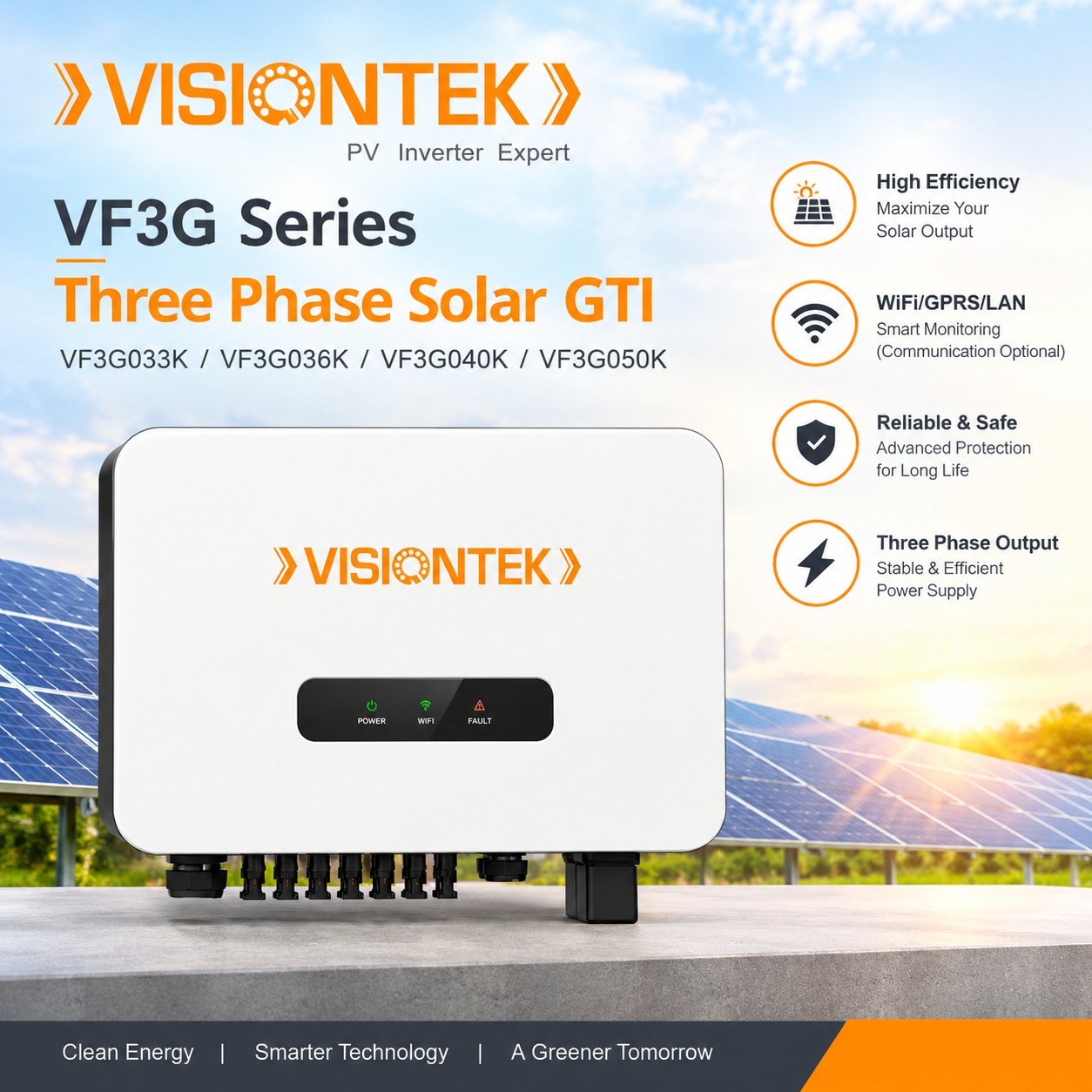 | Inverter Three Phase 50kW Solar Grid-Tied Inverter High-Efficiency Solar Power Conversion for Commercial and Industrial Applications The Three Phase 50kW Solar Grid-Tied Inverter is an advanced solar... View product → |
Batteries VISIONTEK LiFePO4 Batteries Reliable Energy Storage for Homes and Solar Systems The VISIONTEK LiFePO4 Battery Series is designed to provide reliable energy storage for home... |
Solar Glass-to-Glass Solar Module Visiontek Solar Titanium Duo N-Type TOPCon Bifacial Glass-to-Glass Solar Module The Visiontek Solar Titanium Duo N-Type TOPCon Bifacial... |
Keywords